
More Than a Rebuild: Strengthening Reliability for Customers in Northern Maine
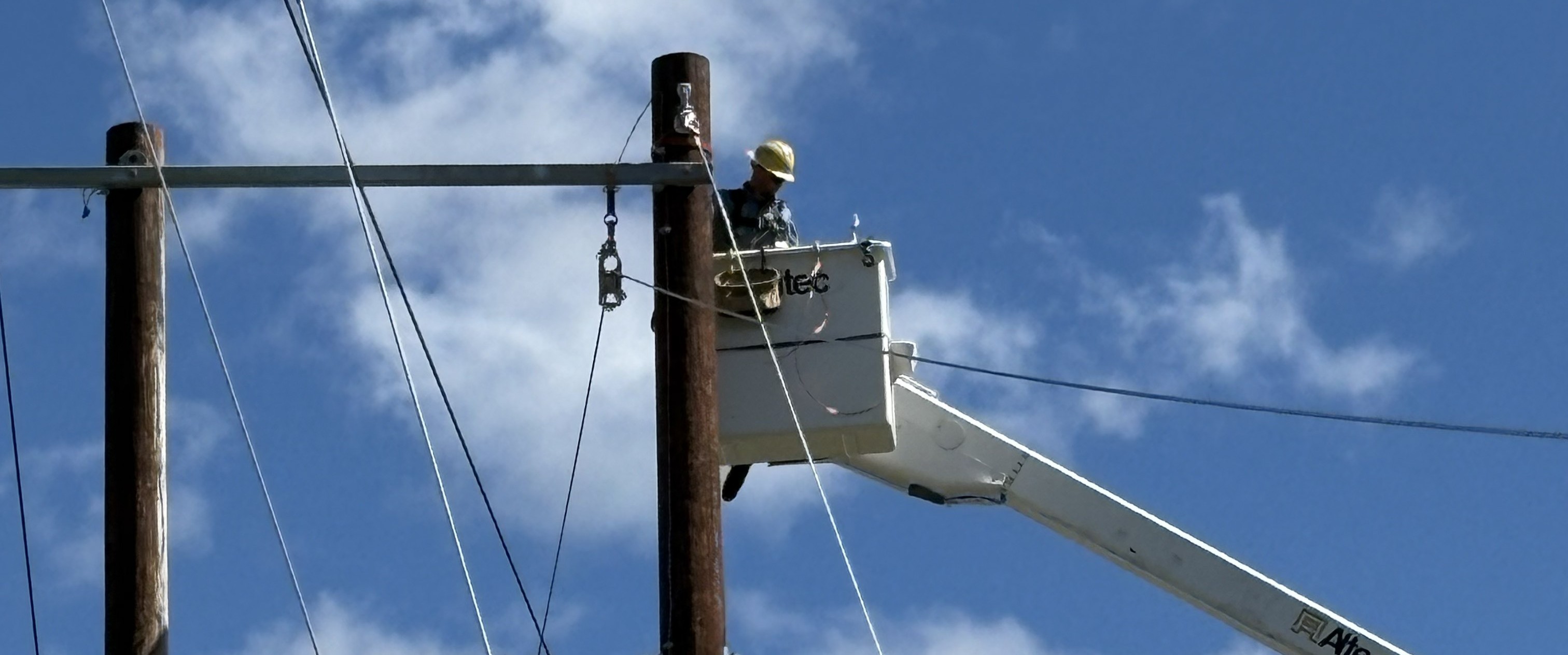
For customers across northern Maine, the latest phase of a major transmission rebuild is about more than replacing aging poles and wire. It's another step toward a stronger, more reliable electric system that can respond more effectively when outages occur.
Versant Power crews are now working on approximately 7.5 miles of line between Limestone and Madawaska, part of a six-phase project to rebuild nearly 42 miles of transmission infrastructure. This is the longest section crews have tackled as a single phase so far.
"Previous phases have focused on replacing infrastructure that has served the region for more than 60 years," said Tim Stitham, Line Supervisor. "The current work continues that effort while adding improvements designed to help the system respond more quickly and effectively when outages occur."
One of those improvements is a new disconnect switch being installed along the line. Today, certain outages can require coordination with the Canadian side of the interconnected system before Versant crews can safely begin patrolling and making repairs. That process can sometimes take hours. The new switch will give crews another way to isolate a section of the line locally, allowing them to establish safe working conditions sooner and begin restoration work more quickly.
For customers, that can mean less time spent waiting for repairs to begin after an outage.
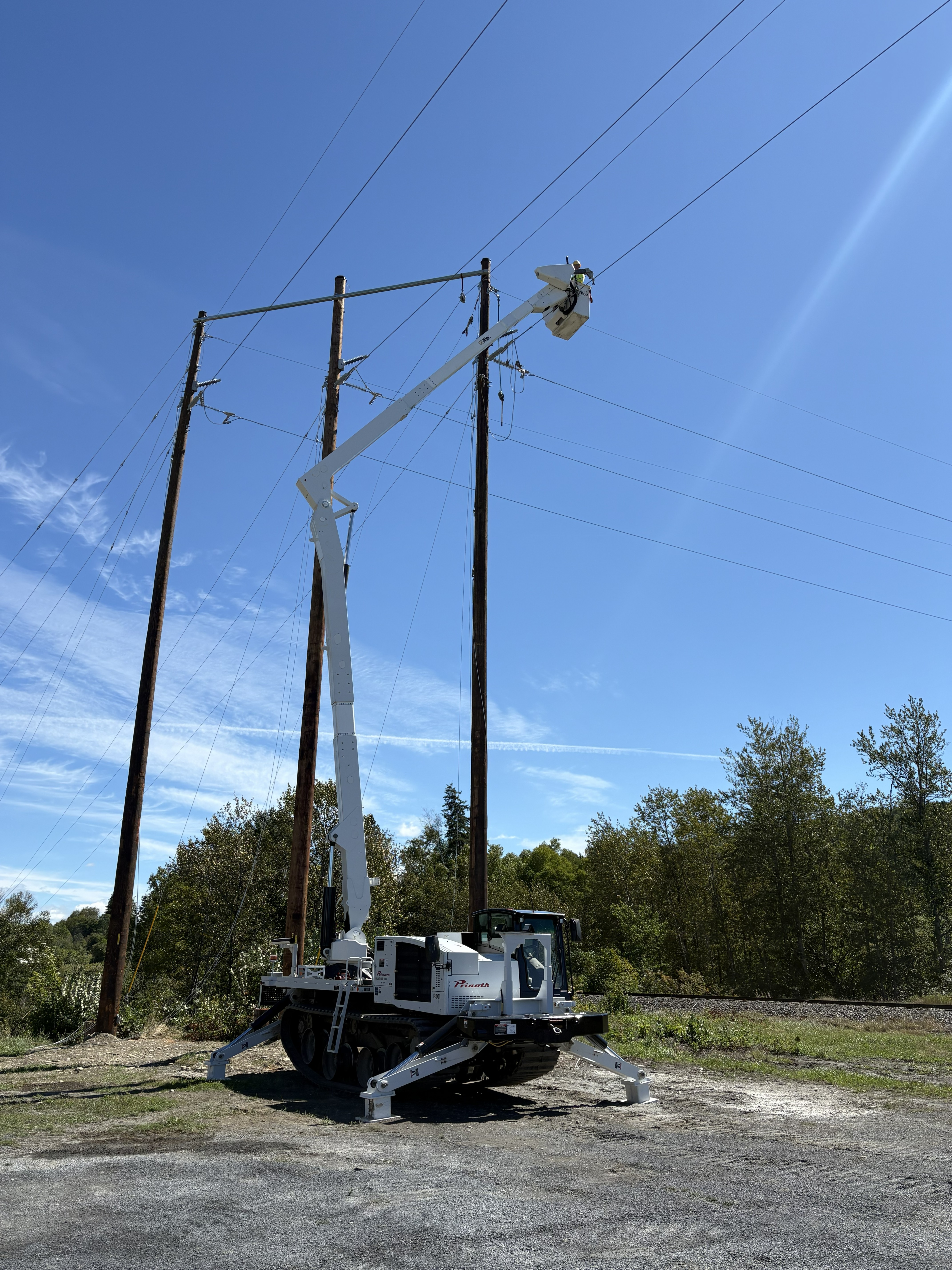
Crews are also installing fiber optic cable as the transmission line is rebuilt. As that fiber network expands, it can improve communication between parts of the electric system and support equipment that can eventually be operated remotely. Instead of sending a crew miles away simply to operate a switch, System Operations could perform certain switching remotely and confirm whether equipment is open or closed.
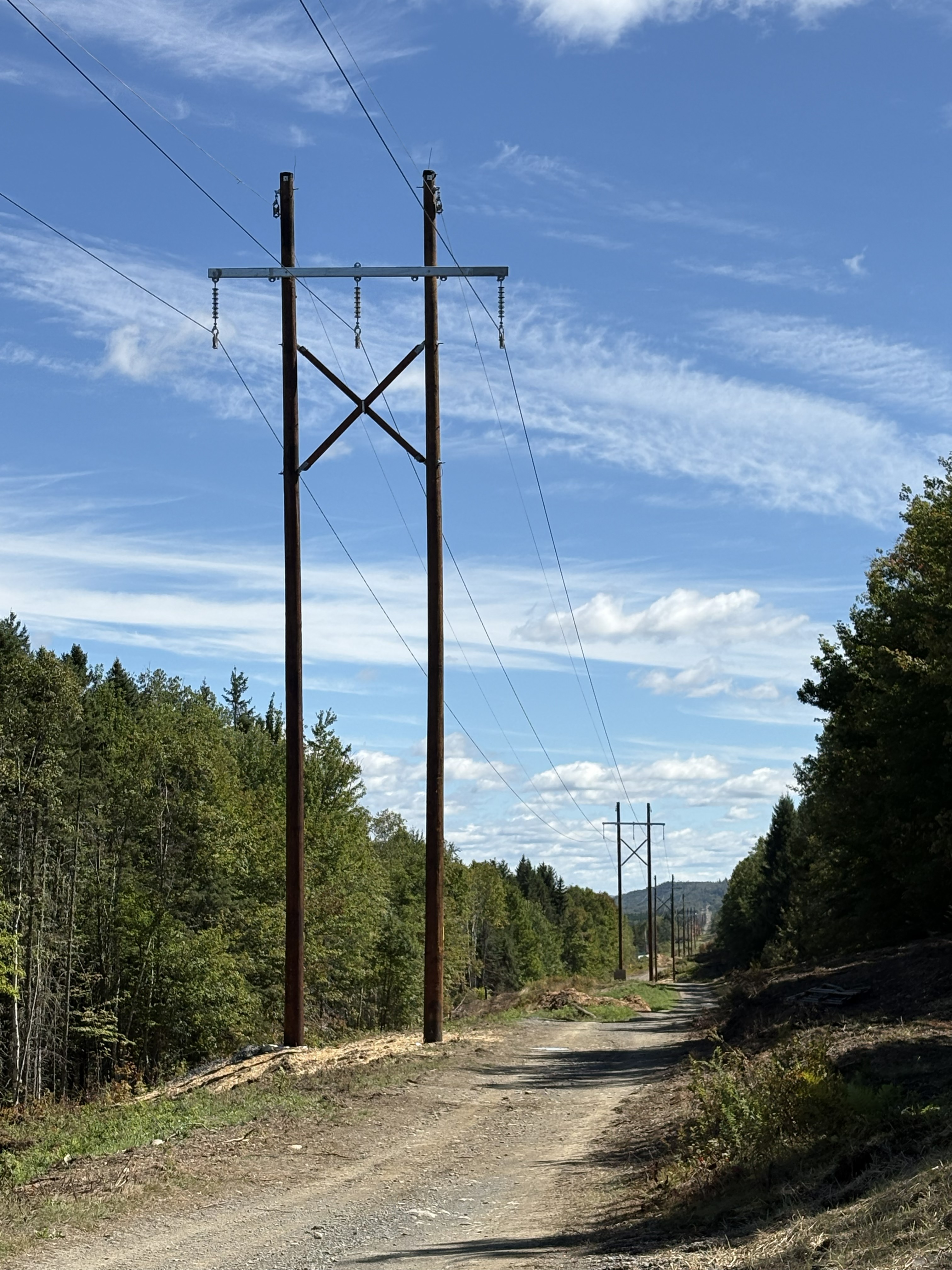
The line itself is also being strengthened. Crews are replacing structures dating back to the 1960s with taller new structures and installing a larger conductor — the wire that carries electricity. The larger conductor can carry more power while reducing electrical losses along the line, helping prepare the system for future needs.
Another major part of the reliability work is happening on the ground around the line.
Crews are reclaiming the full 100-foot right of way and evaluating trees beyond that corridor that could potentially fall onto the transmission line. By creating greater clearance around the conductors and identifying trees that pose a risk, the work is intended to reduce one of the most common causes of outages before a problem occurs.
"Reaching the line can be a project of its own. Much of the right of way crosses remote, wet and uneven terrain, requiring timber mats, culvert improvements and specialized tracked equipment to allow crews and heavy machinery to reach the structures safely," says Tim.
The current section is expected to be completed by the end of this year. From there, crews will move directly into the next approximately six-mile stretch, much of which crosses swampy terrain. Winter conditions will actually help crews access that area, as frozen ground and timber mats create a more stable path for trucks and equipment.
Each completed phase brings the larger rebuild closer to its goal: a stronger transmission system with more capacity, fewer risks and more options for responding when something goes wrong.
For customers across northern Maine, those improvements are all part of building a more reliable electric system for today and for decades to come.